
Thinking, Fast and Slow

I recently read this book:
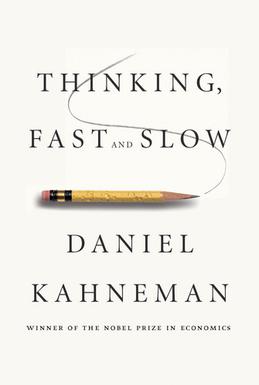

Thinking, Fast and Slow by Nobel laureate Daniel Kahneman.

Kahneman is a well established name in Cognitive Psychology, and his theories were the basis for my PhD dissertation in distance learning. His Nobel prize is in economics because his research has such strong implications for marketing, purchasing behaviors, and consumerism.

In this book, he explains two mental systems: one is fast and somewhat automatic and the other is slower and more thoughtful. He explains how people come to decisions somewhat impulsively and illogically. The book is written very conversationally, and is easy to read, albeit it's quite long (499 pages!).

It has interesting implications for marketing as well as for data collection. Below is a video of Kahneman himself discussing the two types of thinking. Enjoy!


Comments

Popular posts from this blog

Scratch - OWAU discussion 10/28

Aloha kākou, I while back, I learned about this product from a presentation at the eSchool conference. The speaker was so excited about Scratch and was having so much fun demonstrating it that my mind began racing immediately. "I could use it in `Ike Hawai`i courses and I bet I could use it to develop tons of activities for the A`o Makua `ōlelo Hawai`i courses". Then, reality set in as I returned to work intending to try it out after I finished my "next" task. Well, you know how that goes. 7 months later, I finally took a stab at it out of necessity of course. I really wanted some type of activity to teach my students about different Kapu in old Hawai`i without having them just read a list of them. So, what it Sratch? Simply put, it's a developer's tool (a very inexpereinced developer like myself). It allows you to create activities and games using "coding" that is in a drag and drop format. The codes are pre-written & range from phrases like ...

3/19 Owau: FaceBook CourseFeed & Blackboard

Initially when I first joined FaceBook, it was because I wanted to see what the hype was all about since many of our learners seem to be hooked onto this social networking site. After I set up an account, I didn't do much until my friends from high school, college and even my own family (including my dad) started inviting me to be their "friend" to network together. It was only until recently that I realized why our students would probably prefer logging into Facebook first before even thinking about opening up Blackboard to begin their online course. Once your network of friends is set up, it's definitly an easy way to keep updated on what's going on at a distance. I really haven't done much in Facebook besides the basics, but I thought it would be interesting for us to look at the CourseFeed interface ( http://apps.facebook.com/coursefeed ) that was developed. CourseFeed is a free Blackboard Building Block and Facebook app that alerts students in Faceboook w...

E pule kakou . . .

Aloha all, I was trying to think so hard of a "techie" tip and finally gave up. I even googled "tips and tricks" for various programs and then thought "I can't blog about something I don't actually use!" Then, as I was sitting in my Papa Makua class, doing all kinds of protocal and thought about how we keep looking for a short pule to do to open our meetings. I had `A`ali`i write a pule in Hawaiian. He was worried about the grammar and structure of it so I asked Kelly C. to kökua by editing and doing an audio recording so you can hear the pronunciation. Hope it's helpful :) E ho`omalu käkou E kö mäkou makua i loko o ka lani Mahalo no nä pömaika`i a pau. Mahalo no ke ali`i lokomaika`i o Pauahi a me këia kula nei. E `olu`olu, e kia`i iä mäkou i ke alahele küpono me ka lökahi. Ke nonoi ha`aha`a nei mäkou i ka inoa o Iesu Cristo `Ämene `Unuhi (translation): Let us pray Our Father in heaven Thank you for all the many blessings. Thank you for the gen...